Protect your remote workers and access to your resources
Teleworking
A new standard and new challenges
Teleworking has profoundly transformed your working practices. What was once the exception has become the norm for your staff. But this decentralisation of workplaces has considerably extended your security perimeter. Your employees now access critical resources from their homes, coworking spaces or even on the move, creating new potential entry points for cybercriminals.

Risks
Specific attack surface, specific risks
Working remotely exposes you to a range of specific cyber-threats which it is essential to understand in order to protect yourself more effectively:
- vulnerabilities in home environments: insecure Wi‑Fi networks, unprotected personal devices (BYOD), unintentional sharing of work environments, shadow IT and unauthorised applications;
- malicious acts targeting teleworkers: phishing campaigns, “man-in-the-middle” attacks, loss or theft of equipment, ransomware, etc.
Security
A requirement for secure teleworking
In light of these threats, a multi-layered, global security approach is needed to effectively protect your remote workers and your digital assets:
- secure access to corporate resources (via VPN tunnels in line with a ZTNA philosophy),
- workstation protection,
- data encryption,
- strong authentication (SSO) and multi-factor authentication (MFA),
- identity management (PAM),
- segmentation and granular access control,
- awareness-raising and ongoing training,
- incident monitoring and response.
Security
Offer your employees secure remote working with Stormshield’s trusted products
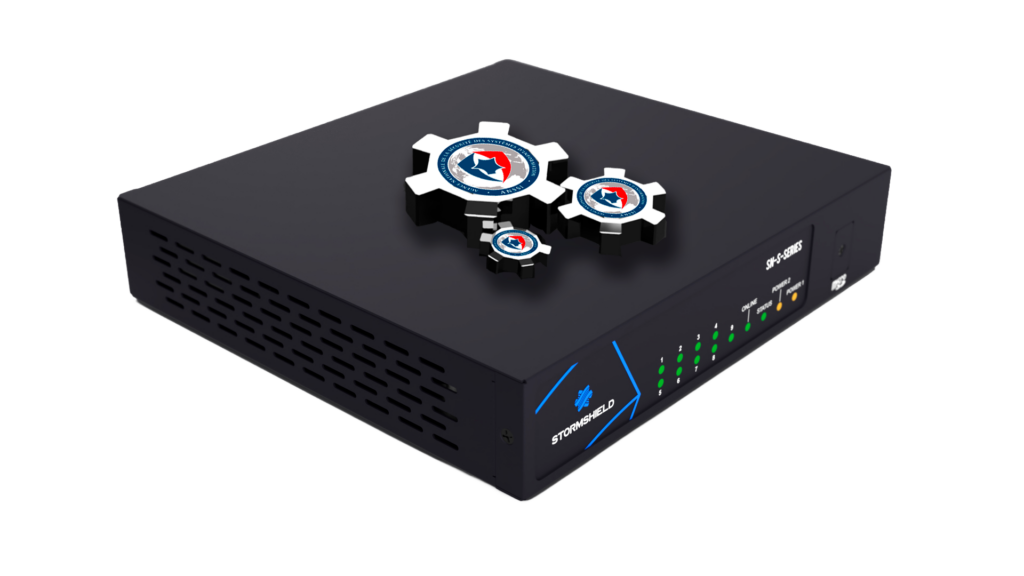
Amid this environment of constant teleworking, your choice of cybersecurity solution is not something to be taken lightly. Trust and sovereignty become decisive criteria when your data are being transmitted and stored using third-party systems. For your network protection, the Stormshield Network Security (SNS) range of firewalls is qualified and certified at the highest European level. These new-generation products include SSL VPN and IPsec VPN functionalities and combine high network performance, modularity and service continuity to provide your employees with secure remote access. In addition, our data encryption solution provides you with seamless protection, enabling your staff to work remotely in the cloud securely and confidentially.
SSL & IPsec VPN tunnels
Implement high-performance, adaptable, user-friendly tunnels.
Identity & access management
Simplify authentication and access management.
Advanced ZTNA
Combine user control for each of your applications with network access control.
Encryption everywhere
Encrypt your data with a simple, transparent product while maintaining your working habits.
Contact us
Enable your employees to work from home safely, starting today. Contact our experts to identify which Stormshield firewall you need, learn more about our data encryption products or arrange a personal demonstration. We can also help you define a clear teleworking policy, including authorised equipment, approved applications, connection procedures, data backup rules and what to do in the event of an incident.
F.A.Q
Your questions about teleworking
Is a free VPN enough for secure teleworking?
No, free VPNs present a number of risks for professional use: limited bandwidth impacting productivity; weak or obsolete encryption protocols; lack of technical support in the event of a problem; and most of all, a business model based on the collection and resale of browsing data. Corporate teleworking requires the use of a professional VPN solution with strong encryption, multi-factor authentication and dedicated support.
What is network micro-segmentation, and how can it be applied to teleworking?
Micro-segmentation creates highly granular security zones for each workload or application, rather than for the entire network. For teleworking, this means isolating each accessible application or resource, ensuring that a user connected to application A cannot access application B without explicit authorisation. In a ZTNA architecture, micro-segmentation is native: each application is individually protected and invisible from the Internet, unlike a traditional VPN, which exposes the entire network once it is connected.
How do you apply the principle of least privilege when teleworking?
The principle of least privilege limits access to only those resources that are strictly necessary for each function. In teleworking, its application is crucial because a compromised account has a limited impact: analysis of roles to precisely define the access requirements of each function; allocation of permissions by AD/LDAP group rather than by individual user; regular review of rights and immediate revocation in the event of a change of role or departure; separation of standard user and administrator accounts; use of PAM (Privileged Access Management) for high-level access with temporary elevation and justification, etc. Default access must always be the most restrictive.
How can you ensure that access to sensitive data when teleworking is traceable?
Traceability is essential for compliance, incident investigation and deterrence. It requires complete logging of all access to sensitive data, centrally stored logs in a SIEM for correlation and analysis, protection of logs against alteration or deletion, retention of these logs in accordance with regulatory requirements (minimum 1 year, often more for regulated sectors) and also automatic alerts on suspicious activities and a rapid audit capability in the event of an incident or regulatory request.